
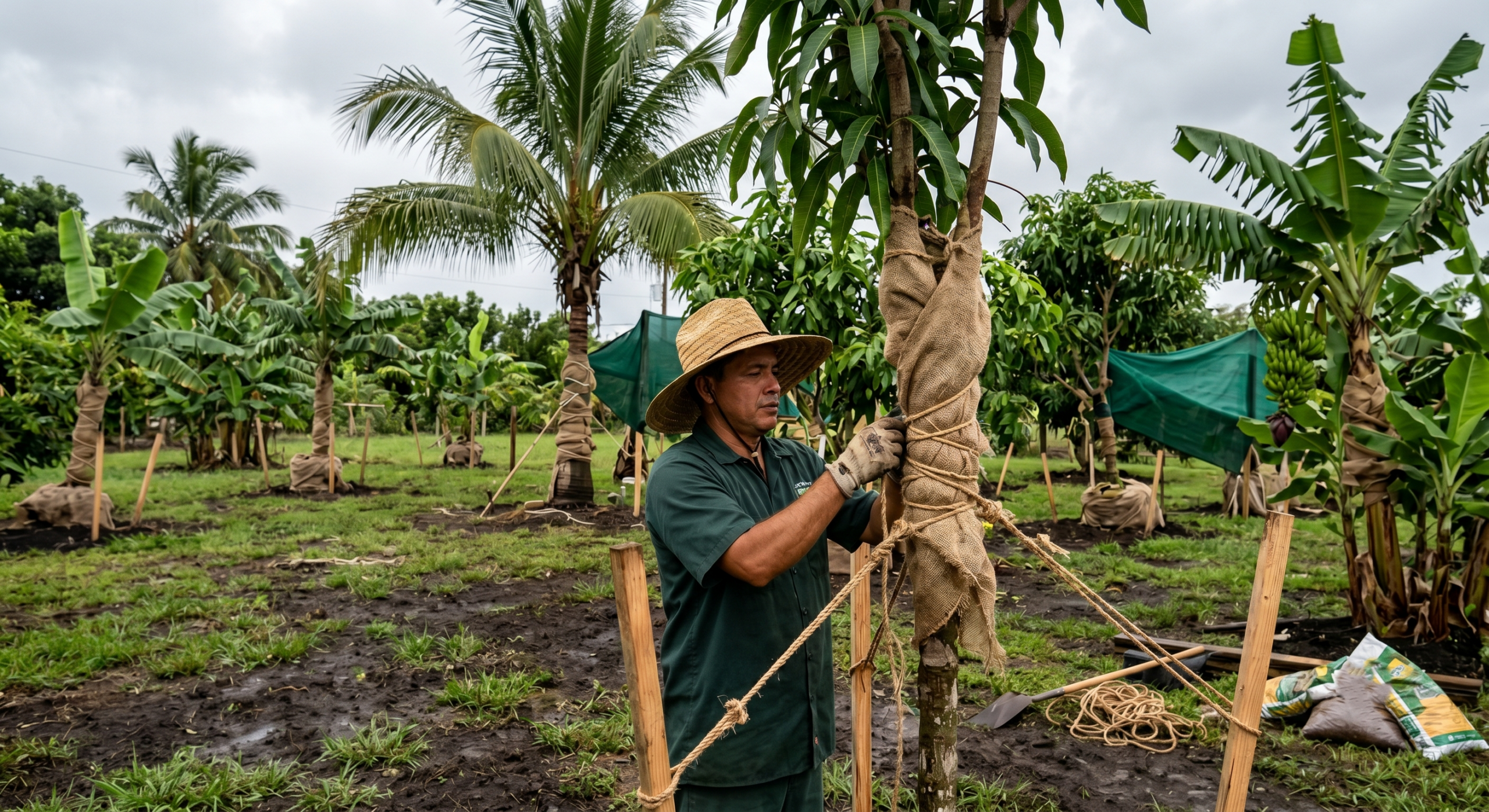
If you grow tropical fruit trees in Palm Beach County, hurricane preparation is not optional — it’s essential. High winds, heavy rainfall, and saturated soil during Florida’s hurricane season can uproot trees, snap branches, strip fruit, and permanently damage young orchards. The good news is that with proper pruning, staking, irrigation adjustments, and strategic planting, you can dramatically reduce storm damage.
In Jupiter and across Palm Beach County, hurricane season runs from June through November. Preparing your mango, avocado, banana, and other tropical fruit trees before storms arrive can protect years of growth and future harvests.
Here’s how to do it correctly.
Why Tropical Fruit Trees Are Vulnerable During Hurricanes
Tropical fruit trees grow quickly in South Florida’s warm climate. While rapid growth is beneficial for production, it can also create structural weaknesses.
Common vulnerabilities include:
- Dense, top-heavy canopies
- Shallow root systems in sandy soil
- Poor drainage during heavy rainfall
- Newly planted trees without strong anchoring
- Excessive fruit weight during storm season
According to the University of Florida IFAS Extension, proper structural pruning significantly reduces hurricane damage in tropical fruit trees [UF IFAS Extension – https://edis.ifas.ufl.edu/].
Storm preparation should begin well before a hurricane is forecasted.
Step 1: Structural Pruning Before Hurricane Season
The single most important protective measure is structural pruning.
Why It Matters
Pruning:
- Reduces wind resistance
- Strengthens branch structure
- Removes weak or crossing limbs
- Encourages balanced growth
- Minimizes canopy drag
In Palm Beach County, fruit trees should be pruned annually in late winter or early spring before peak storm season.
Focus on:
- Opening the canopy for airflow
- Removing vertical water sprouts
- Maintaining a manageable height
- Reducing dense upper growth
Trees that are allowed to grow too tall are significantly more vulnerable to uprooting.
Step 2: Maintain Manageable Tree Height
In residential settings throughout Jupiter and Palm Beach Gardens, fruit trees should be kept at a height that can be safely maintained and harvested.
Shorter trees:
- Experience less wind leverage
- Are easier to stake
- Recover faster after storms
- Sustain less structural breakage
Mango and avocado trees, in particular, benefit from height control pruning.
Step 3: Strengthen Root Systems
Palm Beach County soil is sandy and drains quickly. While this reduces waterlogging risk under normal conditions, hurricane rainfall can temporarily saturate soil.
To strengthen roots:
- Apply consistent deep watering during establishment
- Use organic mulch to retain moisture balance
- Avoid shallow, frequent watering
- Improve soil with compost to increase structure
The USDA Plant Hardiness Zone Map identifies this region as Zone 10, supporting rapid growth — but root stability is crucial in storm conditions [USDA Zone Map – https://planthardiness.ars.usda.gov/].
Step 4: Proper Staking for Young Trees
Newly planted fruit trees are especially vulnerable.
Best staking practices include:
- Using two or three stakes for stability
- Securing with flexible ties (not rigid wire)
- Allowing slight movement to promote trunk strength
- Removing stakes once trees are established
Improper staking can cause trunk damage or weak root development.
Step 5: Thin Heavy Fruit Loads
During hurricane season, heavy fruit loads increase canopy weight and wind resistance.
If a major storm is forecasted:
- Harvest mature fruit early
- Remove excess immature fruit
- Reduce canopy weight strategically
This reduces branch breakage risk.
Step 6: Ensure Proper Drainage
Standing water after heavy storms can suffocate roots.
To prevent this:
- Avoid planting in low-lying areas
- Create slight elevation mounds for trees
- Ensure irrigation systems have rain shut-off sensors
- Check grading around tree bases
Avocado trees are particularly sensitive to prolonged saturated soil.
Step 7: Secure Surrounding Structures
Trellises, fencing, and garden structures can become hazards during high winds.
Inspect:
- Trellis stability
- Raised bed anchoring
- Garden fencing
- Nearby loose materials
A flying object can cause more damage than wind alone.
Step 8: Post-Storm Recovery Plan
After a hurricane passes:
- Inspect trees for structural damage
- Remove broken limbs cleanly
- Avoid over-pruning immediately
- Re-stake leaning trees carefully
- Allow soil to drain before watering again
Quick response reduces disease risk and supports recovery.
Special Considerations for Common Palm Beach Fruit Trees
Mango Trees
- Prune annually to reduce height
- Remove dense upper growth
- Thin fruit in heavy years
Avocado Trees
- Improve drainage before storm season
- Avoid overwatering pre-storm
- Monitor root stability
Banana Plants
- Cut back tall stalks if severe winds are expected
- Remove damaged leaves post-storm
- Support with wind protection plantings
Papaya
- Naturally more fragile
- Consider succession planting
- Stake securely when young
Long-Term Hurricane-Resistant Orchard Design
If you’re planning a backyard orchard or micro farm in Jupiter, storm resilience should be built into the design phase.
Professional orchard layouts include:
- Strategic spacing to reduce canopy collision
- Windbreak plantings
- Proper row orientation
- Drainage grading
- Ongoing structural pruning schedules
Explore installation services here:
https://palmbeachkitchengardens.com/
Garden Coaching for Storm Preparedness
For homeowners who prefer hands-on management, garden coaching can include:
- Pruning demonstrations
- Storm preparation walkthroughs
- Recovery planning
- Seasonal maintenance schedules
Learn more here:
[Garden Coaching Services – https://palmbeachkitchengardens.com/garden-coaching/]
FAQs
When should I prune fruit trees in Palm Beach County?
Late winter or early spring is ideal, before hurricane season begins.
Should I remove fruit before a hurricane?
If a strong storm is forecasted, harvesting mature fruit and thinning heavy loads can reduce breakage.
Can a fallen tree be saved?
Sometimes. If roots remain partially intact, immediate re-staking may help recovery.
Are some fruit trees more hurricane-resistant?
Yes. Trees kept pruned, shorter, and structurally balanced withstand storms better than overgrown trees.
Serving Jupiter & Palm Beach County
Palm Beach Kitchen Gardens supports homeowners throughout:
- Jupiter
- Palm Beach Gardens
- West Palm Beach
- Palm Beach Island
- Surrounding communities
From structural pruning to orchard planning, proactive preparation protects your tropical fruit investment.
Ready to Hurricane-Proof Your Fruit Trees?
Don’t wait until a storm is in the forecast.
Schedule a consultation to evaluate your tropical fruit trees and implement a hurricane-season protection plan tailored to your Palm Beach County property.