
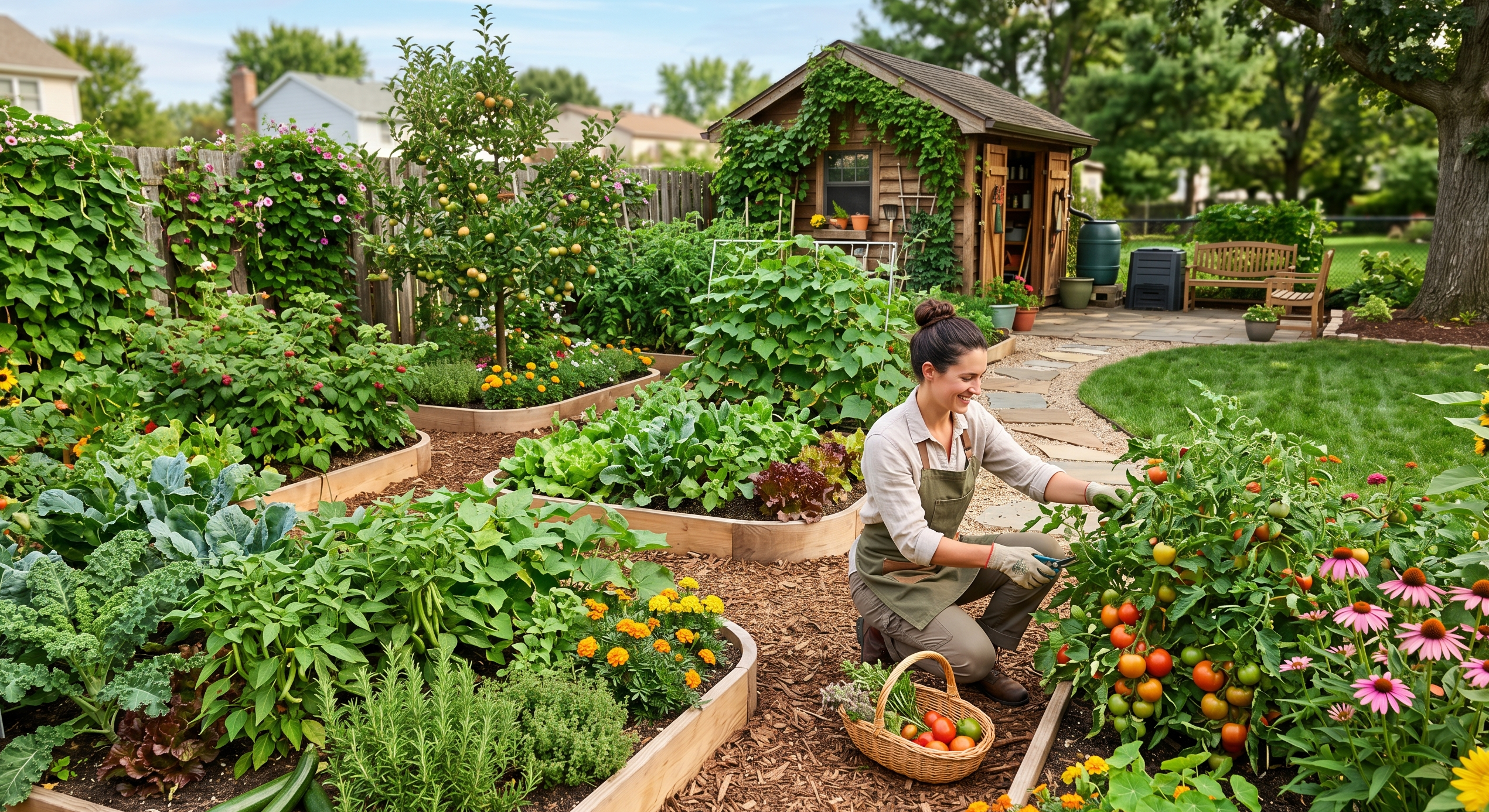
If you’re a homeowner in Jupiter, FL, replacing part of your traditional lawn with an edible landscape is one of the most impactful upgrades you can make. Instead of maintaining grass that requires water, fertilizer, and mowing, you can grow vegetables, tropical fruit trees, herbs, and cut flowers that produce food year-round in Palm Beach County’s climate.
An edible landscape blends beauty and functionality. When properly designed, it enhances curb appeal while turning unused yard space into a productive, sustainable environment.
Here’s how homeowners in Jupiter are transforming their lawns into thriving edible landscapes.
What Is an Edible Landscape?
An edible landscape integrates food-producing plants into a cohesive garden design. Rather than separating ornamental landscaping from food gardens, the two are combined intentionally.
This can include:
- Raised vegetable beds
- Tropical fruit trees
- Herb borders
- Flowering pollinator plants
- Mulched pathways
- Trellised climbing crops
- Structured orchard rows
In Palm Beach County’s USDA Zone 10 climate, edible landscapes can produce throughout the year [USDA Plant Hardiness Zone Map – https://planthardiness.ars.usda.gov/].
This makes lawn replacement particularly appealing in South Florida.
Why Replace a Traditional Lawn in Jupiter?
1. Grass Offers Limited Functional Value
Traditional turfgrass:
- Requires irrigation
- Needs frequent mowing
- Provides no food production
- Often struggles in sandy soil
Meanwhile, edible plants can thrive with strategic planning.
2. Year-Round Growing Potential
Unlike northern states, Jupiter homeowners can grow:
- Winter greens
- Spring vegetables
- Summer heat-tolerant crops
- Tropical fruits year-round
This extended growing season increases the return on your landscape space.
3. Environmental Benefits
Replacing lawn with edible landscaping can:
- Reduce chemical fertilizer use
- Improve soil health
- Support pollinators
- Increase biodiversity
- Improve water efficiency with drip irrigation
The EPA promotes sustainable landscaping practices that reduce runoff and conserve water [EPA Sustainable Landscaping – https://www.epa.gov/watersense].
Step 1: Evaluate Your Backyard Layout
Before removing lawn, assess:
- Sun exposure (6–8 hours ideal for most crops)
- Drainage patterns
- Wind exposure
- HOA regulations
- Access to water
In Jupiter neighborhoods, southern and western exposures often perform best for vegetable production.
Step 2: Remove Turf Strategically
Full lawn removal is not always necessary.
Many Palm Beach County homeowners:
- Convert side yards
- Replace backyard sections
- Frame vegetable gardens with the remaining turf
- Transition gradually
This phased approach makes transformation manageable and visually appealing.
Step 3: Improve Soil Conditions
Palm Beach County soil is sandy and drains quickly.
To support edible crops:
- Incorporate compost
- Add organic matter
- Apply mulch
- Install drip irrigation
- Build raised beds where appropriate
The University of Florida IFAS Extension emphasizes soil enrichment for sustainable vegetable production in Florida [UF IFAS Extension – https://edis.ifas.ufl.edu/].
Soil health is the foundation of a successful edible landscape.
Step 4: Integrate Tropical Fruit Trees
Tropical fruit trees create structure and long-term production.
Popular choices in Jupiter include:
- Mango
- Avocado
- Banana
- Papaya
- Starfruit
- Guava
These trees can:
- Provide privacy screening
- Anchor garden beds
- Add visual height
- Increase harvest diversity
When pruned properly, they maintain a refined appearance suitable for residential communities.
Step 5: Add Raised Vegetable Beds
Raised beds are common in Palm Beach edible landscapes because they:
- Improve drainage control
- Allow custom soil blends
- Provide clean lines
- Elevate aesthetics
- Simplify maintenance
Beds can be arranged in geometric patterns for symmetry, particularly in more formal properties.
Explore installation services here:
[Kitchen Garden Installation – https://palmbeachkitchengardens.com/kitchen-garden-installation/]
Step 6: Incorporate Pollinator & Companion Plants
An edible landscape isn’t just vegetables.
Incorporate:
- Marigolds
- Basil
- Zinnias
- Nasturtiums
- Native flowering plants
These improve pest resistance and support beneficial insects.
Companion planting is especially important in South Florida’s humid environment.
Step 7: Install Efficient Irrigation
Because sandy soil drains rapidly, drip irrigation is strongly recommended.
Benefits include:
- Targeted watering
- Reduced fungal issues
- Improved plant health
- Water conservation
Smart controllers help seasonal residents in Jupiter maintain gardens even while away.
Designing for Aesthetics in HOA Communities
Many Jupiter neighborhoods operate under HOA guidelines.
A well-designed edible landscape:
- Uses clean borders
- Maintains symmetry
- Controls plant height
- Incorporates decorative fencing
- Keeps mulch consistent
When designed thoughtfully, edible gardens often enhance property value rather than detract from it.
Lawn-to-Garden: Common Concerns
“Will It Look Messy?”
Not with structured design and proper maintenance.
“Is It Too Much Work?”
With planning and optional garden coaching, maintenance becomes manageable.
“What About Pests?”
Integrated pest management and companion planting significantly reduce issues.
Maintenance Expectations
An edible landscape requires:
- Seasonal replanting
- Regular harvesting
- Fertilization
- Pruning
- Irrigation monitoring
Some homeowners choose ongoing support through garden coaching:
[Garden Coaching Services – https://palmbeachkitchengardens.com/garden-coaching/]
Others prefer full-service maintenance plans.
Long-Term Benefits of Edible Landscaping
Replacing lawn with productive plants provides:
- Fresh, organic food
- Reduced grocery dependence
- Outdoor family engagement
- Increased landscape diversity
- Enhanced lifestyle value
In communities across Palm Beach County, homeowners are recognizing that a productive yard is more rewarding than a purely decorative one.
FAQs
Can I convert just part of my lawn?
Yes. Many Jupiter homeowners transition sections at a time.
Does edible landscaping work in sandy soil?
Yes, with proper soil amendments and irrigation.
Are fruit trees allowed in HOA communities?
Most HOAs allow them if maintained properly, but always confirm the guidelines.
When is the best time to start?
Fall and early winter are ideal planting seasons in Palm Beach County, though installation can occur year-round.
Serving Jupiter & Palm Beach County
Palm Beach Kitchen Gardens helps homeowners throughout:
- Jupiter
- Palm Beach Gardens
- West Palm Beach
- Palm Beach Island
- Surrounding communities
From partial lawn conversion to full backyard micro farms, thoughtful design ensures your edible landscape is both beautiful and productive.
Ready to Transform Your Lawn?
If you’re ready to replace unused grass with a thriving edible landscape, schedule a consultation to evaluate your property and create a customized transformation plan.
Turn your Jupiter backyard into a year-round source of fresh food and natural beauty.