
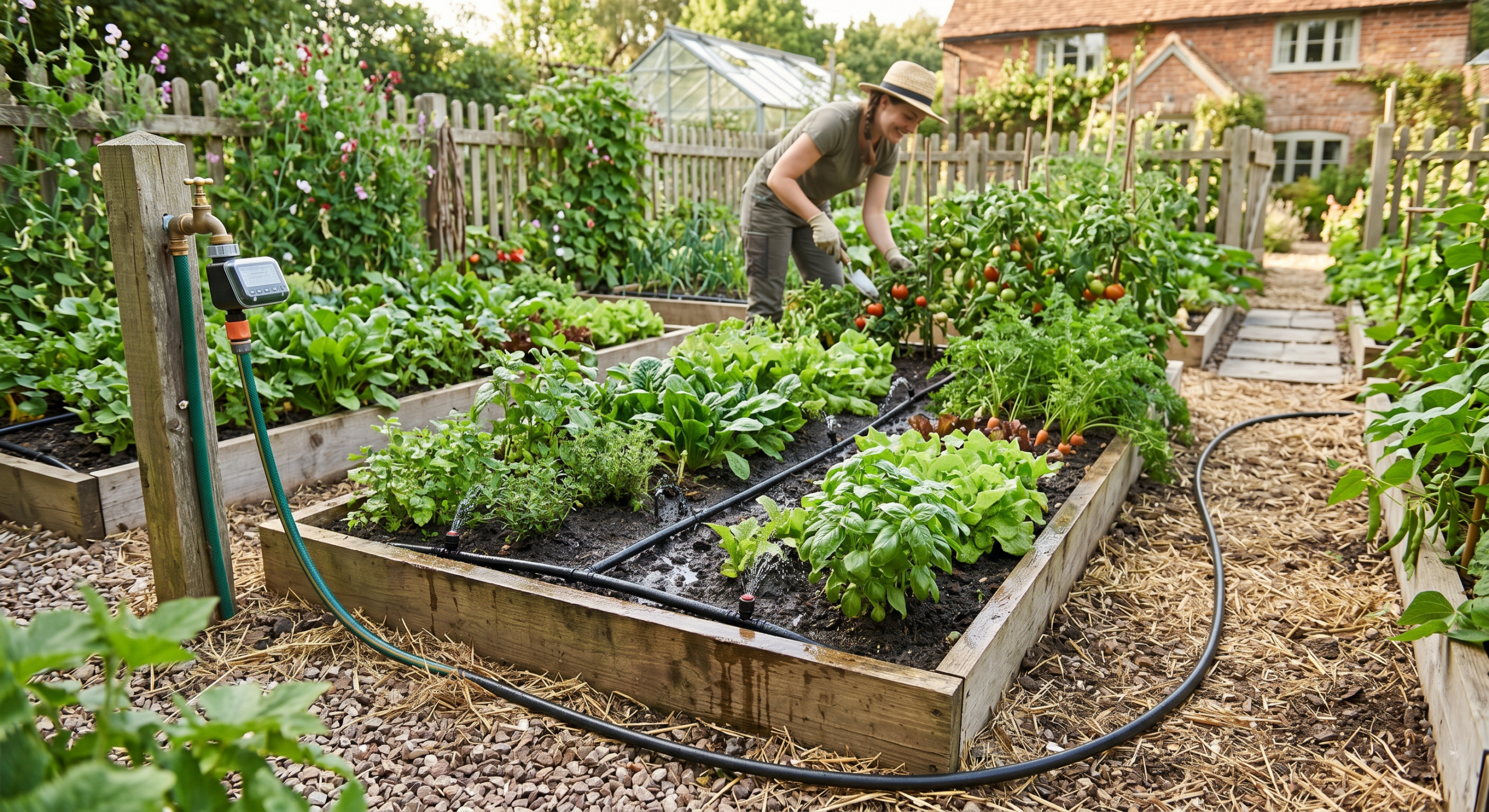
Yes — if you’re installing a kitchen garden in Palm Beach County, a proper irrigation system is not optional. South Florida’s sandy soil, intense sun, dry winters, and heavy summer rains create inconsistent moisture conditions that can stress vegetables, herbs, and tropical fruit trees. A well-designed irrigation system ensures consistent growth, healthier plants, and higher yields year-round.
While hand watering may work temporarily, it rarely supports long-term success in Jupiter and surrounding communities.
Let’s break down why irrigation matters and what type works best in South Florida.
Why South Florida Gardens Struggle Without Irrigation
Palm Beach County’s climate is unique. While we receive significant annual rainfall, it comes in extremes.
Seasonal Pattern:
- Winter: Dry season with minimal rainfall
- Summer: Heavy rainfall with intense downpours
- Year-Round: High evaporation due to heat and sun exposure
Because native soil is sandy, water drains quickly. Nutrients leach out just as fast.
According to the University of Florida IFAS Extension, Florida’s sandy soils have low water-holding capacity and require consistent moisture management for optimal crop performance [UF IFAS Extension – https://edis.ifas.ufl.edu/].
Without irrigation:
- Roots dry out rapidly in winter
- Inconsistent watering stresses plants
- Vegetable production declines
- Fruit trees experience reduced flowering and fruit set
Why Hand Watering Isn’t Enough
Many homeowners initially assume they can water their kitchen garden manually.
The reality:
- It’s difficult to maintain consistency
- Travel schedules disrupt routines
- Overwatering becomes common
- Leaf wetness increases fungal risk
In humid climates like Jupiter, overhead watering can promote mildew, blight, and bacterial issues.
Consistency is more important than volume.
The Best Irrigation System for Kitchen Gardens
Drip Irrigation Is Ideal
Drip irrigation systems deliver water directly to plant root zones through controlled emitters.
Benefits include:
- Reduced water waste
- Minimal evaporation
- Fewer fungal issues
- Targeted hydration
- Clean aesthetic appearance
Drip systems are especially effective for:
- Raised beds
- Vegetable rows
- Herb gardens
- Tropical fruit trees
The EPA promotes drip irrigation as one of the most efficient watering methods for home landscapes [EPA WaterSense – https://www.epa.gov/watersense].
Irrigation for Raised Beds vs. In-Ground Gardens
Raised Beds
Raised beds drain even faster than native soil.
They require:
- Frequent, controlled watering
- Even moisture distribution
- Mulch to retain soil hydration
Drip lines spaced properly across each bed prevent dry pockets.
In-Ground Gardens
In-ground installations require:
- Soil amendment to improve moisture retention
- Root-zone watering
- Drainage planning to avoid standing water
Even though sandy soil drains quickly, summer storms can cause temporary pooling. Proper grading and irrigation design prevent root rot.
Irrigation for Tropical Fruit Trees
Young fruit trees in Palm Beach County require consistent watering during establishment (first 12–18 months).
Key considerations:
- Deep watering encourages strong root systems
- Overwatering increases disease risk
- Wind exposure increases moisture loss
- Drip rings help regulate flow
Fruit trees such as mango, avocado, and starfruit benefit from steady hydration during flowering and fruit development. Learn more about fruit tree integration here:
https://palmbeachkitchengardens.com/
Smart Irrigation Controllers for South Florida
Modern irrigation systems can include:
- Timers
- Moisture sensors
- Rain shut-off devices
- Smart controllers that adjust based on weather
In Palm Beach County, rain sensors are especially important during summer storm cycles.
Automated systems allow homeowners in Jupiter — including seasonal residents — to maintain gardens even when away.
Watering Frequency in Palm Beach County
There is no universal watering schedule, but general guidelines include:
Winter (Dry Season):
- 2–3 times per week for vegetables
- Deep watering for fruit trees
Summer (Rainy Season):
- Adjust based on rainfall
- Monitor drainage
- Reduce frequency but maintain consistency
Observing plant behavior is critical. Wilting midday may not always indicate underwatering — heat stress can mimic dehydration.
Signs Your Garden Needs Irrigation Adjustment
Watch for:
- Leaf curling
- Blossom drop
- Small fruit size
- Yellowing lower leaves
- Powdery mildew from excess moisture
Proper irrigation balances hydration without oversaturation.
Hurricane Season Considerations
Heavy summer rainfall can create waterlogging.
Professional irrigation systems account for:
- Drainage slope
- Soil composition
- Root aeration
- Shut-off protocols during storms
After hurricanes or tropical storms, irrigation systems should be inspected for damage.
Can You Install Irrigation After the Garden Is Built?
Yes — but installing irrigation during initial construction is more efficient and less disruptive.
Retrofitting systems may require:
- Lifting beds
- Adjusting soil
- Reconfiguring layouts
Planning irrigation at the design stage ensures long-term success.
Explore professional installation services here:
[Kitchen Garden Installation – https://palmbeachkitchengardens.com/kitchen-garden-installation/]
Garden Coaching for Irrigation Management
For homeowners who prefer hands-on involvement, garden coaching can include:
- Watering schedule guidance
- Irrigation system walkthroughs
- Seasonal adjustments
- Moisture monitoring education
Learn more here:
[Garden Coaching Services – https://palmbeachkitchengardens.com/garden-coaching/]
Common Irrigation Mistakes in South Florida
Avoid:
- Overhead sprinklers on vegetables
- Inconsistent watering schedules
- Ignoring drainage issues
- Watering during peak midday heat
- Failing to adjust seasonally
A professionally designed system eliminates most of these issues from the start.
FAQs
Is irrigation required for a kitchen garden in Palm Beach County?
While technically not mandatory, it is strongly recommended for consistent yields and plant health.
Can rainfall replace irrigation in summer?
Rain helps, but storms are inconsistent. Supplemental irrigation ensures stability.
How often should I water vegetables in Jupiter, FL?
Most vegetables require consistent moisture several times per week, adjusted for season and rainfall.
Do tropical fruit trees need regular watering?
Yes, especially during the establishment and fruit development stages.
Serving Jupiter & Palm Beach County
Palm Beach Kitchen Gardens designs irrigation systems specifically for:
- Kitchen gardens
- Backyard micro farms
- Tropical fruit orchards
- Cut flower gardens
Serving:
- Jupiter
- Palm Beach Gardens
- West Palm Beach
- Palm Beach Island
- Surrounding communities
Ready to Install Irrigation for Your Kitchen Garden?
A properly designed irrigation system protects your investment and ensures your garden thrives through South Florida’s dry winters and stormy summers.
Schedule a consultation to design a kitchen garden irrigation system tailored to your Palm Beach County property.