
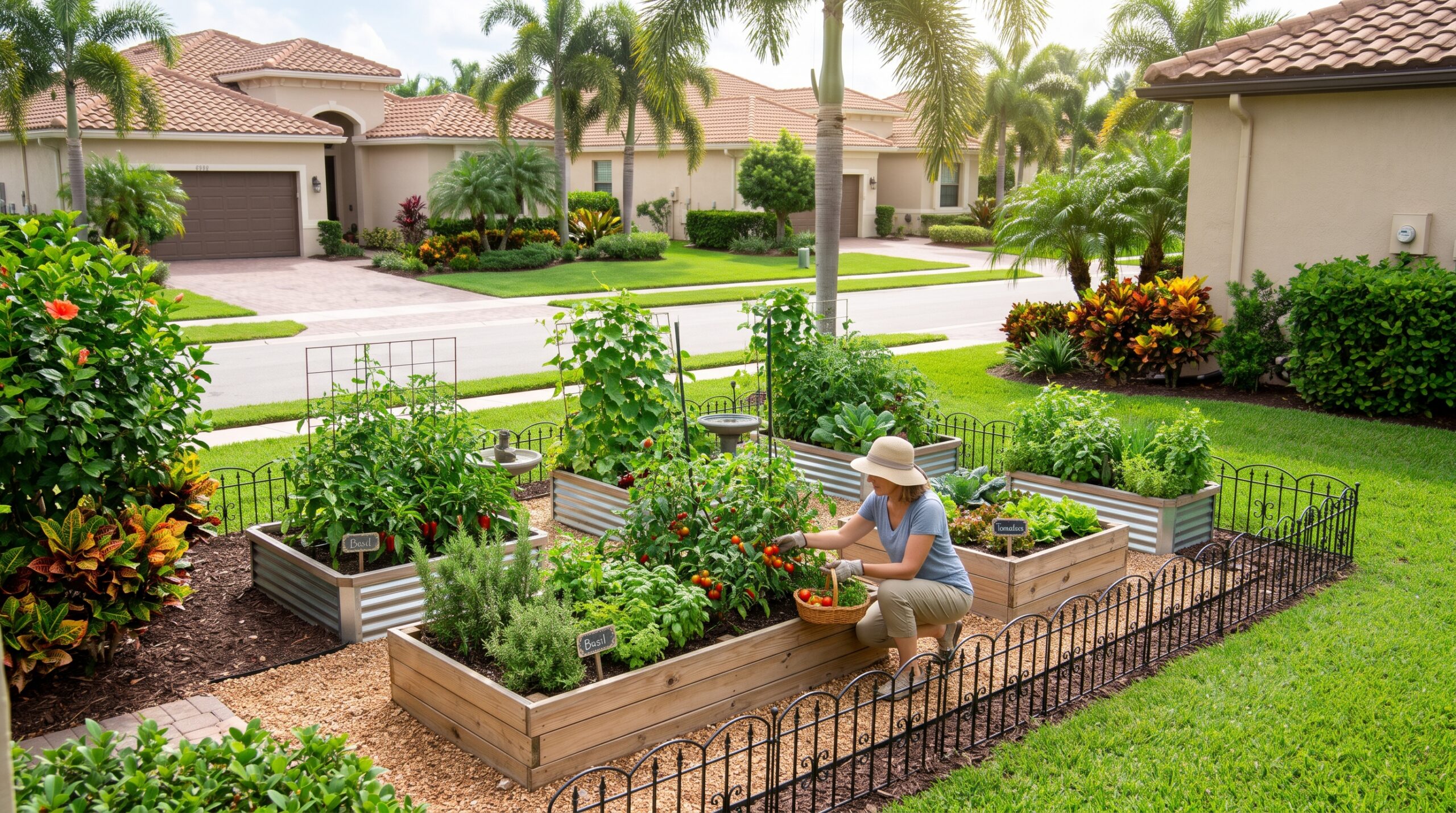
Yes, you may be able to have a kitchen garden in an HOA community in Palm Beach County, but the location, appearance, and features of your garden may be affected by your association’s governing documents and applicable Florida law. Requirements can vary significantly between communities.
Before installing raised beds, trellises, fencing, or other permanent features, review your HOA documents and determine whether approval is required. Planning around those requirements from the beginning can help you create a productive garden that also looks intentional within your landscape.
What HOA Rules Can Affect a Kitchen Garden?
Homeowners associations often establish exterior standards intended to maintain a consistent appearance throughout a community. Depending on your HOA, those standards may address more than the plants themselves.
Before planning your garden, check for rules concerning:
- Raised beds and permanent garden structures
- Front-, side-, and backyard landscaping
- Architectural review or modification approval
- Fences, trellises, stakes, and plant supports
- Approved materials, finishes, or colors
- Irrigation and drainage
- Maintenance and exterior appearance
Do not assume that a garden elsewhere in the neighborhood establishes what is permitted on your property. Another homeowner may have received specific approval, have different lot conditions, or be subject to different circumstances.
Does Florida Law Affect HOA Vegetable Garden Rules?
Florida homeowners should consider state law in addition to their community documents.
Florida Statutes Section 604.71 addresses vegetable gardens on residential properties and limits certain regulation of vegetable gardens by counties, municipalities, and other political subdivisions. However, homeowners should not assume that this statute by itself answers every question involving a private homeowners association.
You can review current Florida statutes through the Florida Legislature’s Online Sunshine website.
Because HOA restrictions and Florida law can involve legal questions specific to a property or association, homeowners facing a dispute or uncertain restriction should consult a qualified Florida attorney. Gardening guidance should not replace legal advice about your governing documents.
How Can You Plan an HOA-Friendly Kitchen Garden?
An HOA-friendly kitchen garden should combine food production with a neat, deliberate appearance.
Consider Visibility Before Finalizing the Design
Sunlight and convenient access matter, but in an HOA community, visibility may matter too. Consider how raised beds, supports, and taller crops will appear from the street, neighboring properties, and common areas.
If approval is required, confirm the process before purchasing materials or beginning construction.
Create a Cohesive Appearance
Kitchen gardens do not need to look temporary or improvised. Consistent bed materials, defined edges, organized planting areas, and well-positioned supports can make an edible garden feel integrated with the surrounding property.
A professionally planned Kitchen Garden can account for growing conditions while creating a layout that complements the home and existing landscape.
What Should You Include in an HOA Application?
If your association requires architectural or landscape approval, a clear proposal can help reviewers understand exactly what you intend to build.
First, ask the association or property manager what documentation is required. Depending on the community and project, that may include:
- A site plan showing the proposed location
- Dimensions and placement of raised beds
- Bed materials, finishes, or colors
- Details about trellises, fencing, or supports
- Photographs or manufacturer information
- Irrigation or drainage details
- A brief description of ongoing maintenance
Avoid beginning installation while approval is still pending when your governing documents require prior authorization.
Once approval is granted, retain the written decision and approved plans with your property records.
Can a Kitchen Garden Complement an Upscale Landscape?
Yes. A productive edible garden can also be an attractive landscape feature.
The difference often comes down to design. Bed proportions, pathways, edging, materials, plant supports, and surrounding landscaping can make the garden feel like a deliberate extension of the property rather than a separate utility area.
That can be especially valuable in Palm Beach County communities where exterior presentation is important.
Palm Beach Kitchen Gardens creates edible growing spaces with both productivity and the character of the surrounding property in mind.
Frequently Asked Questions
Do I need HOA approval for raised garden beds in Palm Beach County?
It depends on your association’s governing documents and the features you plan to install. Check the current rules and approval requirements before adding permanent raised beds, fencing, trellises, or similar structures.
Can an HOA tell me where to put a vegetable garden?
The answer can depend on your governing documents, the proposed location, and applicable law. Review the specific restriction rather than assuming it is enforceable or unenforceable. Seek qualified legal advice when necessary.
What if my HOA requires architectural approval?
Follow the association’s stated process before beginning installation. Providing the requested location, dimensions, materials, and visible design features can give the reviewing committee a clearer picture of the proposed garden.
Plan an HOA-Friendly Kitchen Garden in Palm Beach County
Living in an HOA community does not necessarily mean giving up the goal of growing food at home. The practical first steps are to understand the rules, confirm whether approval is required, and develop a garden plan that works with your property.
If you are considering an HOA kitchen garden in Jupiter or elsewhere in Palm Beach County, contact Palm Beach Kitchen Gardens to discuss a thoughtful edible garden designed around your home, growing conditions, and community setting.