
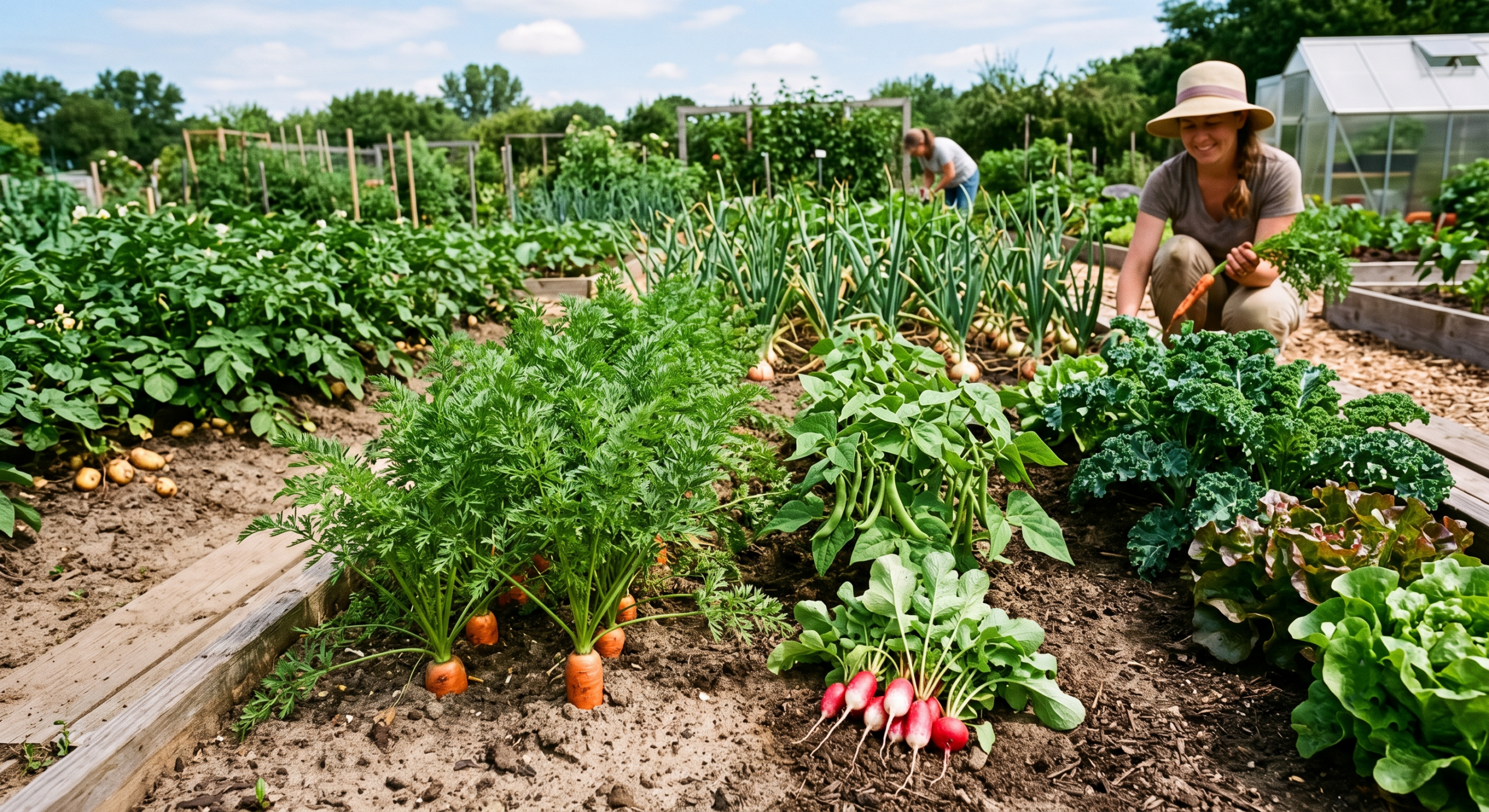
If you live in Palm Beach County, you’re gardening in sandy soil — and that changes everything. Florida’s native soil drains quickly, holds fewer nutrients, and heats up faster than heavier soils. The good news is that many vegetables actually thrive in sandy conditions when properly managed with compost, mulch, and irrigation.
Whether you’re building a kitchen garden in Jupiter, Palm Beach Gardens, or West Palm Beach, selecting vegetables suited for sandy soil will dramatically improve your harvest success.
Here’s what grows best — and how to support healthy production year-round.
Understanding Sandy Soil in Palm Beach County
Palm Beach County soil is typically:
- Light-textured
- Fast-draining
- Low in organic matter
- Quick to lose nutrients
- Easy to work
While sandy soil prevents waterlogging — which is helpful during heavy summer rains — it also requires active soil management.
According to the University of Florida IFAS Extension, improving sandy soil with compost and organic material increases nutrient retention and moisture-holding capacity [UF IFAS Extension – https://edis.ifas.ufl.edu/].
The key is choosing crops that naturally tolerate or even prefer well-drained soil conditions.
What Makes a Vegetable Good for Sandy Soil?
Vegetables that perform well in Palm Beach County’s soil often:
- Have deep root systems
- Tolerate fast drainage
- Adapt to fluctuating moisture
- Grow quickly
- Thrive in heat
Let’s look at the best options for Jupiter and surrounding areas.
1. Sweet Potatoes
Sweet potatoes are one of the best vegetables for sandy soil.
They:
- Thrive in loose, well-drained conditions
- Develop large, healthy tubers
- Tolerate heat and humidity
- Require minimal maintenance
Sandy soil actually helps tubers expand without obstruction.
In Palm Beach County, sweet potatoes perform especially well during warmer months.
2. Carrots
Loose sandy soil allows carrots to grow straight and uniform.
Benefits include:
- Easy root penetration
- Reduced deformities
- Good drainage
Carrots grow best during the cooler season (fall through early spring in South Florida).
3. Radishes
Radishes are fast-growing and ideal for sandy soil.
They:
- Mature quickly
- Prefer loose soil
- Perform well in winter months
- Help break up compacted areas
Because they grow rapidly, they’re ideal for crop rotation cycles.
4. Okra
Okra thrives in heat and tolerates sandy soil conditions extremely well.
It:
- Handles drought better than many vegetables
- Grows vigorously in summer
- Requires full sun
- Produces continuously
For Jupiter homeowners, okra is a reliable warm-season crop.
5. Eggplant
Eggplant adapts well to South Florida’s sandy soil when enriched with compost.
It:
- Tolerates heat
- Benefits from good drainage
- Produces consistently in summer
- Requires regular harvesting
Mulching around eggplant roots helps retain moisture.
6. Peppers
Peppers perform well in sandy soil provided nutrients are replenished.
They:
- Prefer warm soil
- Produce throughout multiple seasons
- Adapt to raised beds and in-ground gardens
Consistent fertilization is important due to nutrient leaching.
7. Seminole Pumpkin
A Florida native favorite, Seminole pumpkin is ideal for Palm Beach County.
It:
- Thrives in heat
- Tolerates sandy soil
- Is disease resistant
- Stores well after harvest
As a vining crop, it benefits from trellising or open space.
8. Malabar Spinach
Unlike traditional spinach, Malabar spinach thrives in heat and humidity.
It:
- Grows vertically
- Tolerates sandy soil
- Produces continuously in summer
- Adds ornamental appeal
It’s an excellent alternative to cool-season greens.
9. Bush Beans
Beans adapt well to sandy soil and improve it in the process.
They:
- Fix nitrogen into the soil
- Grow quickly
- Perform well in warm conditions
- Fit easily into rotation cycles
Beans help improve soil fertility over time.
Improving Sandy Soil for Better Yields
Even though these vegetables tolerate sandy soil, improvement increases productivity.
Best practices include:
- Adding compost before each planting cycle
- Applying thick organic mulch
- Installing drip irrigation
- Rotating crops seasonally
- Conducting periodic soil testing
The USDA Plant Hardiness Zone Map confirms Palm Beach County’s Zone 10 status, supporting year-round vegetable cycles [USDA Zone Map – https://planthardiness.ars.usda.gov/].
Soil management makes the difference between average and abundant harvests.
Raised Beds vs In-Ground for Sandy Soil
Both methods work in Palm Beach County.
Raised Beds:
- Allow custom soil blends
- Improve moisture retention
- Offer clean aesthetics
- Provide better nutrient control
In-Ground Gardens:
- Benefit from natural drainage
- Require heavier compost amendments
- Work well for root crops
Explore installation services here:
[Kitchen Garden Installation – https://palmbeachkitchengardens.com/kitchen-garden-installation/]
Irrigation Considerations
Because sandy soil drains rapidly, consistent watering is essential.
Drip irrigation:
- Delivers water directly to roots
- Reduces evaporation
- Prevents fungal issues
- Conserves water
The EPA recommends drip irrigation as an efficient watering method for residential gardens [EPA WaterSense – https://www.epa.gov/watersense].
Common Mistakes in Sandy Soil Gardening
Avoid:
- Skipping compost
- Overwatering in summer storms
- Ignoring mulch
- Planting heavy clay-loving crops
- Forgetting nutrient replenishment
Success in Jupiter and Palm Beach Gardens requires ongoing soil attention.
FAQs
Is sandy soil bad for vegetables?
Not necessarily. Many vegetables thrive in sandy soil when properly amended.
How often should I add compost?
At least once per planting cycle for optimal fertility.
Can tropical fruit trees grow in sandy soil?
Yes, especially mango and sapodilla, when planted with proper soil preparation.
What’s the best season to plant vegetables in Palm Beach County?
Fall and winter are ideal for cool-season crops; heat-tolerant crops thrive in spring and summer.
Serving Jupiter & Palm Beach County
Palm Beach Kitchen Gardens helps homeowners throughout:
- Jupiter
- Palm Beach Gardens
- West Palm Beach
- Palm Beach Island
- Surrounding communities
From soil preparation to full kitchen garden installation, climate-specific design ensures your sandy soil works for you — not against you.
Ready to Build a Thriving Garden in Sandy Soil?
With the right crop selection and soil strategy, Palm Beach County’s sandy soil can produce abundant harvests year-round.
Schedule a consultation to design a kitchen garden tailored to your Jupiter property and local soil conditions.