
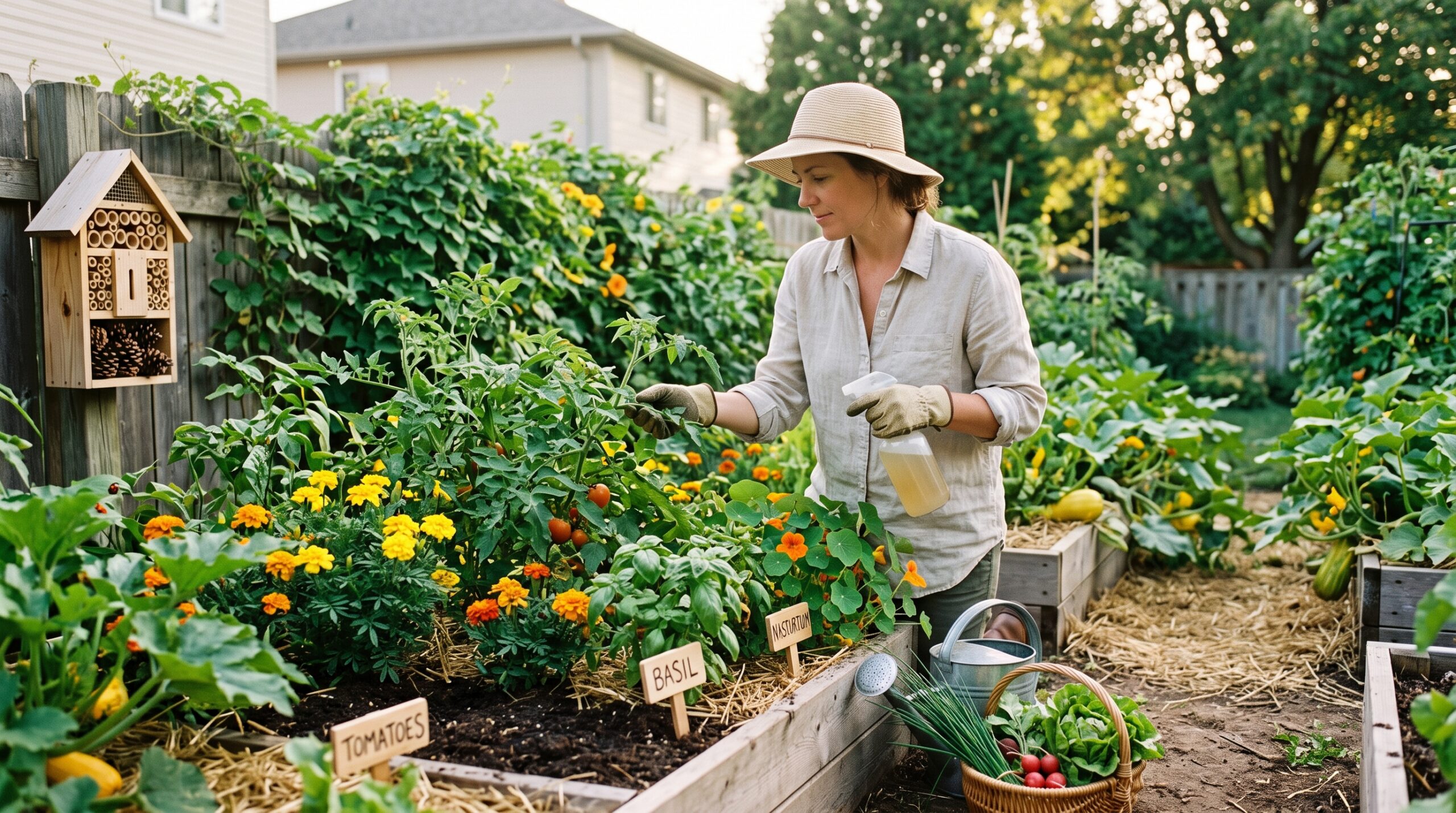
Organic garden pest control in Palm Beach County works best when prevention and early detection come before treatment. South Florida’s warm, humid climate supports productive edible gardens for much of the year, but it also creates favorable conditions for aphids, whiteflies, caterpillars, and other pests.
The goal is not to eliminate every insect. For kitchen gardeners in Jupiter and throughout Palm Beach County, a better approach is to identify pests correctly, keep plants healthy, encourage beneficial insects, and use targeted controls only when damage requires action.
Why Are Garden Pests Common in South Florida?
Palm Beach County does not have the prolonged winter freezes that interrupt many pest populations in colder climates. Warm temperatures, humidity, rainfall, and continuous plant growth can allow insect activity to persist for much of the year.
Vegetable gardens also provide tender leaves, flowers, and developing produce. Overcrowded plants, stressed crops, and poor airflow can make certain problems harder to manage.
The University of Florida IFAS Integrated Pest Management program offers Florida-specific guidance based on identifying and managing pests while reducing unnecessary pesticide use.
Start With Prevention and Early Detection
A healthy kitchen garden is easier to protect than one already under stress.
Support Healthy Plant Growth
Proper irrigation, healthy soil, adequate spacing, and seasonally appropriate crops help plants grow more successfully. Before assuming insects are responsible for a struggling plant, consider other causes such as excessive moisture, nutrient problems, disease, or unsuitable growing conditions.
A professionally planned Kitchen Garden can address spacing, access, irrigation, and crop placement from the beginning, making routine monitoring easier.
Inspect Plants Regularly
Check leaves, stems, flowers, and developing produce before damage becomes extensive. Look closely at leaf undersides, tender new growth, and areas where leaves curl or discolor.
Finding a problem early may allow you to remove an affected leaf, wash off a small group of insects, or hand-pick a caterpillar instead of treating an entire bed.
Which Pests Should Kitchen Gardeners Watch For?
Correct identification matters because not every insect found near vegetables is harmful.
Aphids and Whiteflies
Aphids and whiteflies feed on plant sap and often gather around tender growth or leaf undersides. A few insects may not require treatment, especially when natural predators are already present.
Monitor affected plants for increasing populations, distorted growth, or other signs that feeding is becoming significant.
Caterpillars
Some caterpillars can consume vegetable foliage quickly. Look for holes, missing leaf tissue, eggs, or droppings around damaged plants.
Hand-picking can be practical in a small kitchen garden. Before using another control, identify the caterpillar whenever possible because some larvae develop into beneficial or desirable pollinators.
Encourage Beneficial Insects
An organic garden should not be an insect-free garden.
Lady beetles, lacewings, predatory insects, and other natural enemies can help control certain pests. Flowering plants may also provide nectar, pollen, or habitat for beneficial insects and pollinators.
Plant diversity can therefore serve a practical purpose. Mixing appropriate flowers and herbs into an edible garden creates a more varied environment than planting large areas with a single crop.
Use Organic Pest Treatments Selectively
The word “organic” does not mean a treatment is harmless to every organism. Even organic products should be used only when there is a clear reason.
Before applying any treatment:
- Positively identify the pest.
- Determine whether the damage warrants intervention.
- Choose a control intended for that specific problem.
- Read and follow the product label.
- Avoid unnecessary applications around beneficial insects.
For minor infestations, physical controls may be enough. Removing heavily affected leaves, hand-picking larger pests, or using an appropriate barrier can sometimes resolve the issue without spraying.
If treatment becomes necessary, use the most targeted option suitable for the identified pest and edible crop, following all label directions.
What Pest-Control Mistakes Should You Avoid?
Treating symptoms without identifying the cause is one of the most common mistakes. Yellowing, wilting, or poor growth does not automatically indicate insect damage.
Overwatering and overcrowding can also create stressed conditions. Likewise, leaving heavily damaged or declining plant material in a bed may make ongoing garden problems harder to manage.
Palm Beach Kitchen Gardens takes a whole-garden approach that considers plant selection, layout, soil, irrigation, seasonal conditions, and routine observation rather than viewing pest control as an isolated task.
Frequently Asked Questions
What is the best organic pest control for a vegetable garden?
There is no universal treatment. Start by identifying the pest and assessing the damage. Then use the least disruptive method that can effectively address the specific problem.
Should I spray my kitchen garden regularly?
Routine spraying is usually less useful than regular inspection. Monitoring allows you to respond to a confirmed problem instead of applying treatments when they may not be necessary.
Are all insects in a kitchen garden pests?
No. Many insects are harmless, while others pollinate plants or prey on pests. Identifying an insect before controlling it helps protect beneficial garden life.
Get Help With Your Palm Beach County Kitchen Garden
Organic pest management works best as part of thoughtful garden care. Healthy plants, frequent observation, accurate identification, and selective intervention can keep minor issues from becoming larger problems.
If pests are affecting your edible garden in Jupiter or elsewhere in Palm Beach County, contact Palm Beach Kitchen Gardens to discuss practical support for a healthier, more productive kitchen garden.